
When the Money Runs Out — A Guide to Financial Stress
When the Money Runs Out — A Guide to Financial Stress
4.75 / 5.0
(4) 4 total reviews
Couldn't load pickup availability
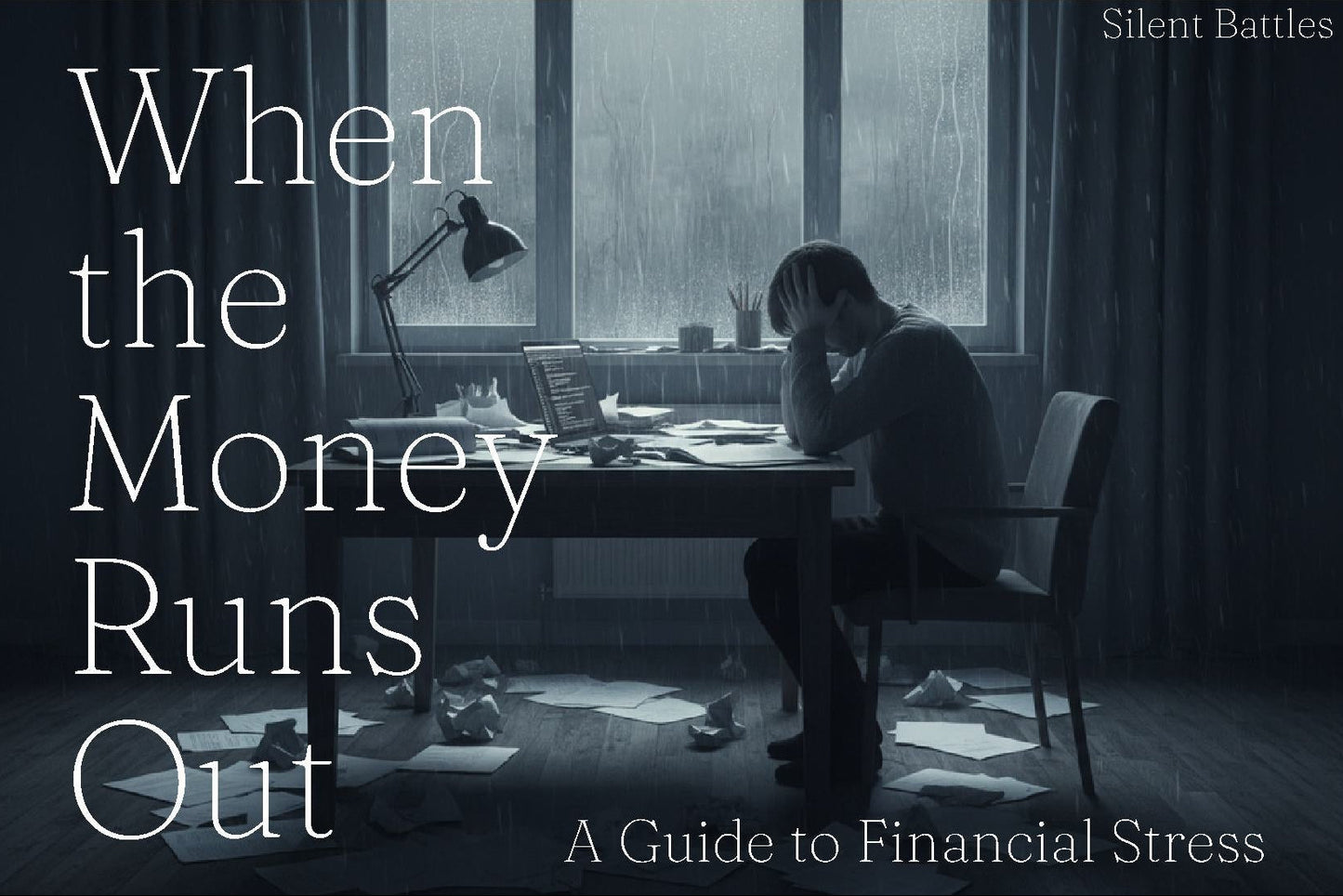
When the Money Runs Out
A Guide to Financial Stress
Darius's Story
Darius made $52,000 a year and hadn't opened his banking app in eleven days.
Not because he forgot. Because he already knew what he'd see. And knowing was easier to manage than seeing.
He'd gotten good at the math in his head — the rough, approximate, please-don't-let-it-be-worse-than-I-think math. He knew roughly what was in checking. Roughly what was due Friday. Roughly how many days he had before roughly became a problem.
He was 31, living in Memphis, working a job he'd worked hard to get. And somehow, every month, it still felt like running on a treadmill that was just slightly faster than his legs.
The worst part wasn't the numbers.
The worst part was dinner.
When his coworkers said "we're going out Friday, you coming?" — Darius would smile and do the math before he even responded. Not the fun math. The other math. The can I actually do this without it mattering math. And then he'd say "yeah, sounds good" and spend the rest of the week quietly rearranging things in his head to make it work.
Nobody knew.
He smiled too well. He dressed too carefully. He'd learned early that looking like you had it together was almost as good as actually having it together — and a lot easier to fake.
The shame was the part nobody warned him about. The feeling that he should have figured this out by now. That everyone else had some manual he'd never received. That being this stressed about money at 31 meant something was fundamentally wrong with him.
It didn't. But he didn't know that yet.
This guide was written for the eleven days before you open the app. For the math you do in your head at dinner. For the shame that follows you into every room money touches.
What This Guide Will Do For You
By the time you finish this, you will:
- Understand why financial stress messes with your head in ways that have nothing to do with math
- Know how to stop the shame spiral long enough to actually think straight
- Have the first real steps to take when you don't know where to start — even if the numbers are bad
- Know how to talk to a partner, family member, or friend about money without it turning into a fight or a breakdown
- Have small, real things you can do today that actually matter — even when the situation feels impossible
This isn't a guide about budgeting apps or cutting your morning coffee. It's about the part nobody writes about — the emotional weight of financial stress, and how to carry it without it crushing you.
This guide is a starting point, not a substitute for professional mental health support. If you or someone you know is in crisis, please call or text 988 (Suicide & Crisis Lifeline — US) or your local crisis line.
My brother lost his job and went completely silent. I sent him this. He called me two days later. First call in three months. This guide opened a door that had been closed.
Most financial resources skip the emotional part. This one starts there. The section on shame was the most useful thing I've read about money in years.
I had $47 in my account and didn't know how I was going to make rent. I found this guide and read it in one sitting. I didn't have more money after — but I had a plan and I had hope. That was enough to keep going.
I lost my business during a hard season and the shame nearly destroyed me. This guide addressed the psychological weight of financial collapse — not just the practical steps but the identity crisis the shame the isolation. Finally something that understood the whole picture.