
When Someone You Love Gets Sick — A Guide to Caregiver Depression
When Someone You Love Gets Sick — A Guide to Caregiver Depression
4.75 / 5.0
(4) 4 total reviews
Couldn't load pickup availability
When Someone You Love Gets Sick
A Guide to Caregiver Depression
Elena's Story
Nobody told Elena what it would actually feel like.
She knew her mother was sick. She had known for eight months. She had sat through the appointments and learned the terminology and set up the medication schedule and called the insurance company seventeen times. She had done everything right.
She had been strong.
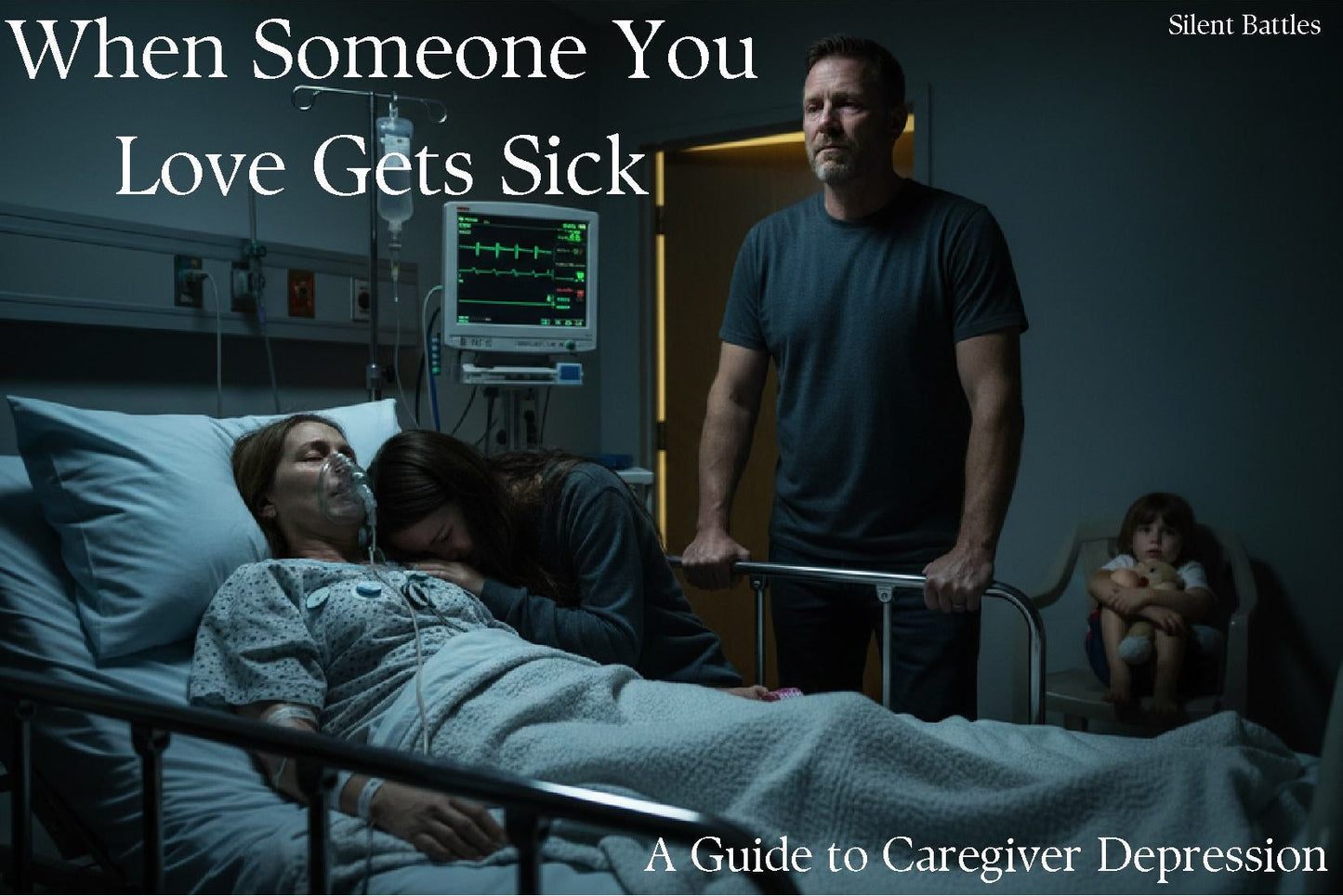
But the night she sat in that hospital room in Lisbon, Portugal, watching her mother sleep with tubes in her arms and machines breathing for her — her teenage daughter's head resting on the bed beside her grandmother's hand, her husband standing at the foot of the bed gripping the rail because it was the only thing holding him up — Elena felt something crack open in her that she didn't know how to close.
Not just fear. Not just grief. Something deeper.
The specific devastation of loving someone and being completely powerless to save them.
She had been so focused on taking care of everyone else that she hadn't noticed she was disappearing. The person who used to laugh easily and sleep through the night and make plans for the future had been slowly replaced by someone who just managed. Just survived. Just got through the next thing.
Nobody checked on Elena.
Not because they didn't love her. Because she was so good at holding it together that it never occurred to anyone that she might be falling apart.
Caregiver depression is one of the most invisible forms of suffering there is. Because you're not the sick one. Because you're supposed to be the strong one. Because everyone is focused on the person in the bed and nobody thinks to check on the person sitting beside it.
Elena's mother eventually came home. It took three more months. And when she did, Elena finally let herself cry — really cry — for the first time since the diagnosis.
Her mother held her hand and said: "I know. I saw you holding it together. You can put it down now."
This guide was written for everyone sitting beside a bed, gripping a rail, holding it together for everyone else.
You can put it down now too.
What This Guide Will Do For You
By the time you finish this, you will:
- Recognize what caregiver depression actually looks like — and why it's so easy to miss in yourself
- Understand the guilt of struggling when someone you love is struggling more — and why that guilt is lying to you
- Have language for grieving someone who is still here
- Know what to do when you've been strong for so long you've forgotten how to ask for help
- Understand how to take care of yourself without feeling like you're abandoning them
- Have a path forward — whether what comes next is recovery, ongoing caregiving, or loss
You are allowed to be devastated. You are allowed to need support. You are allowed to be a person going through something unbearable — not just a caregiver doing a job.
This guide is a starting point, not a substitute for professional mental health support. If you or someone you know is in crisis, please call or text 988 (Suicide & Crisis Lifeline — US) or your local crisis line.
Anticipatory grief is real and this guide addressed it directly. I'm grieving my father while he's still alive and I didn't have language for that until now. Profound.
Everyone in the group needed this. We've all been so focused on our loved ones that we forgot to take care of ourselves. This guide reminded us we matter too.
I was sitting in the waiting room while my wife was in surgery and I found this. Read the whole thing. By the time she came out of recovery I felt less alone than I had in months. Remarkable timing. Remarkable guide.
I've been caring for my mother with Alzheimer's for three years. Everyone asks about her. Nobody asks about me. This guide was the first resource I've found that acknowledged what caregiving costs — and gave me tools to survive it.