
The Neighborhood Nobody Lives In Anymore — A Guide to Suburban Loneliness
The Neighborhood Nobody Lives In Anymore — A Guide to Suburban Loneliness
4.75 / 5.0
(4) 4 total reviews
Couldn't load pickup availability
The Neighborhood Nobody Lives In Anymore — Updated to match a young man
Evan's Story
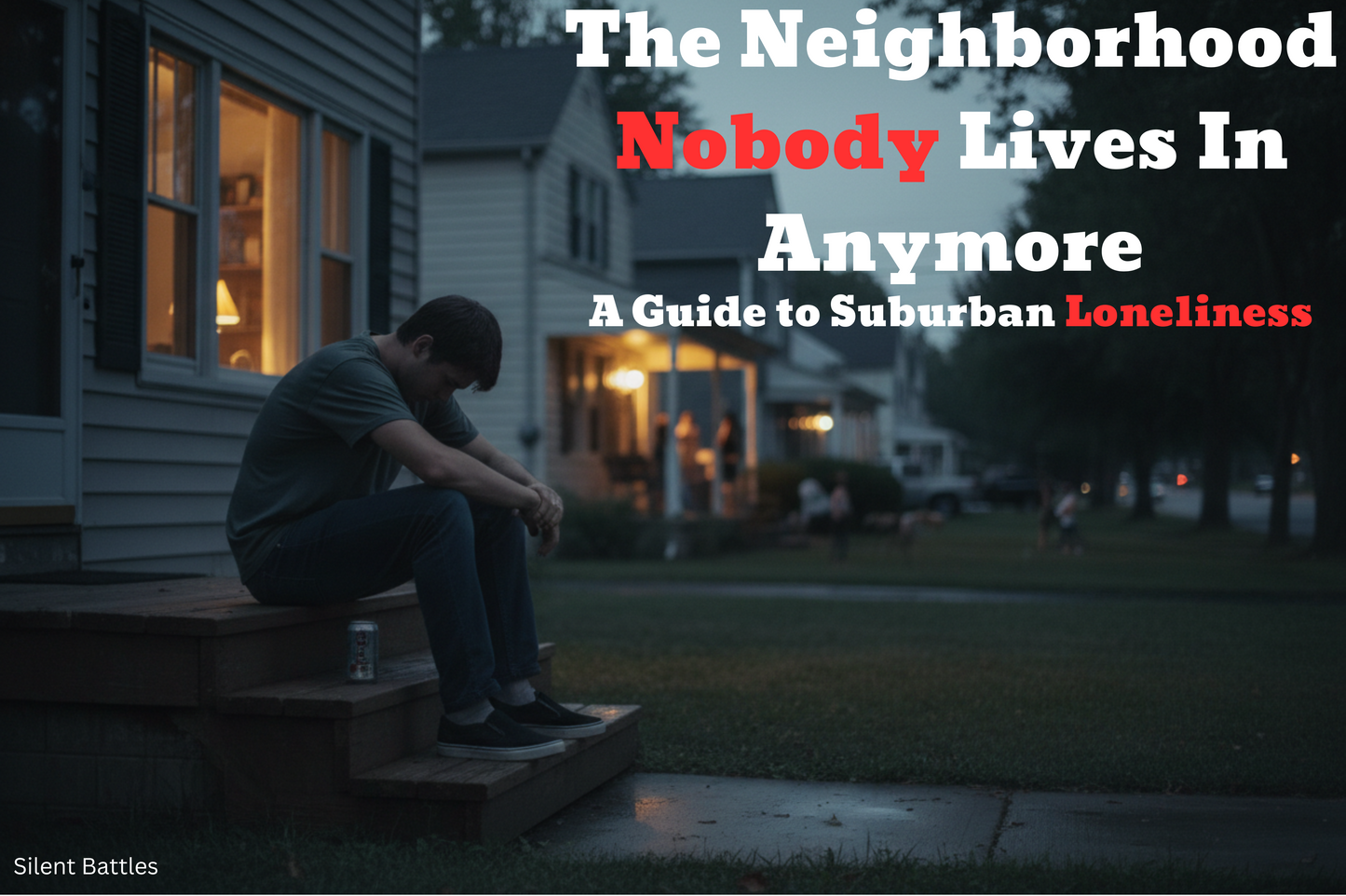
Evan had lived on the same street for three years and didn't know a single neighbor's last name.
He was 29, living in a suburb outside of Dallas, in an apartment complex full of people he passed in the parking lot and never spoke to. He'd moved there for the lower rent. For the space. For the life he was supposed to be building.
He had it — the steady job, the decent apartment, the neighborhood Facebook group where people posted about packages being stolen and nobody ever actually talked.
He was desperately lonely.
The suburb had been designed for privacy. Every unit faced inward. Every garage door went up, swallowed a car, came back down. People moved through the neighborhood without ever stopping. There were no front porches. No corner stores. No reason to linger.
He'd tried. He'd nodded at neighbors. He'd held the elevator. He'd said "hey, how's it going" to the guy across the hall a dozen times without either of them ever stopping to actually answer.
The neighborhood had a rhythm of isolation built into its architecture, and he couldn't figure out how to break it.
His friends from college were scattered. He saw them twice a year if he was lucky. That wasn't the same as having someone to call when something small happened. Someone to grab food with on a Wednesday.
Suburban loneliness is invisible because it's surrounded by the trappings of a normal life. This guide is for everyone who has everything they were supposed to want and still feels completely alone.
What This Guide Will Do For You
By the time you finish this, you will:
- Understand why suburban design actively works against human connection — and why that's not your imagination
- Recognize the specific loneliness of being surrounded by neighbors you don't know
- Know how to build real community in an environment that wasn't designed for it
- Have practical steps toward connection that don't require everyone on your street to suddenly become different people
- Feel seen in a kind of loneliness that rarely gets named
You are not antisocial. You are not ungrateful. You are lonely in a place that was built to keep people apart. That can change.
This guide is a starting point, not a substitute for professional mental health support. If you or someone you know is in crisis, please call or text 988 (Suicide & Crisis Lifeline — US) or your local crisis line.
Couldn't put it down. Felt like it was written specifically for me. Shared it with my sister who lives three streets over and we finally talked about how lonely we both are. Progress.
Less philosophical than I expected more actionable. The do this today sections gave me things I could actually try without overhauling my whole life. Appreciated that.
Suburban loneliness is invisible because from the outside everything looks fine. Nice house good school district two cars. And complete emptiness. This guide saw through all of that and spoke directly to me.
I've lived in my neighborhood for eight years and don't know a single neighbor's last name. This guide helped me understand why suburban life is designed for isolation — and gave me small real steps to push back against it.