
The Diner at the Edge of Nowhere — A Guide to Loneliness in America
The Diner at the Edge of Nowhere — A Guide to Loneliness in America
4.75 / 5.0
(4) 4 total reviews
Couldn't load pickup availability
The Diner at the Edge of Nowhere — A Guide to Loneliness in America
The Diner at the Edge of Nowhere A Guide to Loneliness in America
Ray's Story
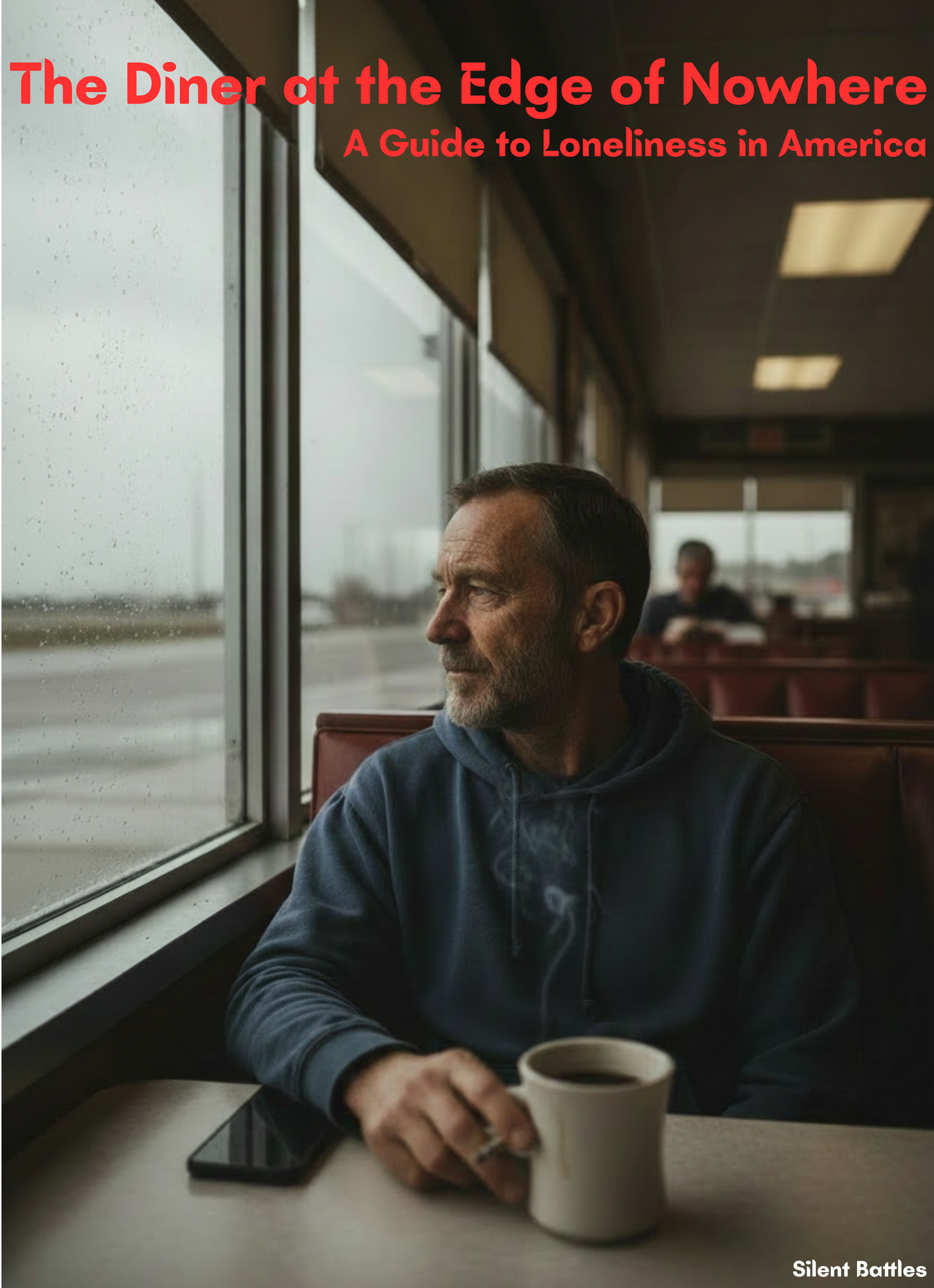
Ray ate breakfast at the same diner every morning because it was the only place anyone knew his name.
He was 58, living in a small town in rural Ohio that had lost its factory, its young people, and its sense of itself over the last twenty years. He'd stayed. Most people he grew up with hadn't.
The diner was the last place in town where people still gathered. Not many — a handful of regulars, the same faces, the same booths. But it was something. It was the closest thing he had to community.
He'd been married once. His kids lived in Columbus and called on holidays. He had a house, a truck, a dog named Earl. By certain measures, he was fine.
But fine and lonely are not opposites. And Ray knew, sitting in that booth with his coffee going cold, that he was one of millions of Americans who had somehow ended up on the outside of a life that was supposed to include more people than this.
Loneliness in America is a public health crisis. It is not a rural problem or an urban problem or an old person's problem. It is an everyone problem. And it is killing people — quietly, slowly, in diners and apartments and suburbs and cities — in ways that don't make the news.
What This Guide Will Do For You
By the time you finish this, you will:
- Understand the structural reasons Americans are lonelier than ever — and why it's not your fault
- Recognize the difference between solitude and isolation
- Know what the research actually says about loneliness and health — and why it matters
- Have real ideas for building connection in a world that has made it harder than it should be
- Feel less alone in your loneliness — because you are not the only one sitting in the booth with cold coffee
America got lonely together. We can find our way back together too.
This guide is a starting point, not a substitute for professional mental health support. If you or someone you know is in crisis, please call or text 988 (Suicide & Crisis Lifeline — US) or your local crisis line.
We read this together and had the most meaningful discussion we've had in three years of meeting. Everyone felt it applied to them in some way.
Appreciated that this guide doesn't just blame individuals for being lonely — it looks at the bigger picture while still giving personal tools. Felt seen and empowered at the same time.
I kept thinking about the diner. About all the diners. About all the people sitting alone in them. This guide is beautifully written and deeply useful. A rare combination.
I live in a small town where everyone knows each other and I have never felt more alone. This guide understood that paradox completely. It's about the structural loneliness built into how we live — and what one person can do about it anyway.