
Camera Off — A Guide to Remote Work Loneliness and Depression
Camera Off — A Guide to Remote Work Loneliness and Depression
4.75 / 5.0
(4) 4 total reviews
Couldn't load pickup availability
Camera Off — A Guide to Remote Work Loneliness and Depression
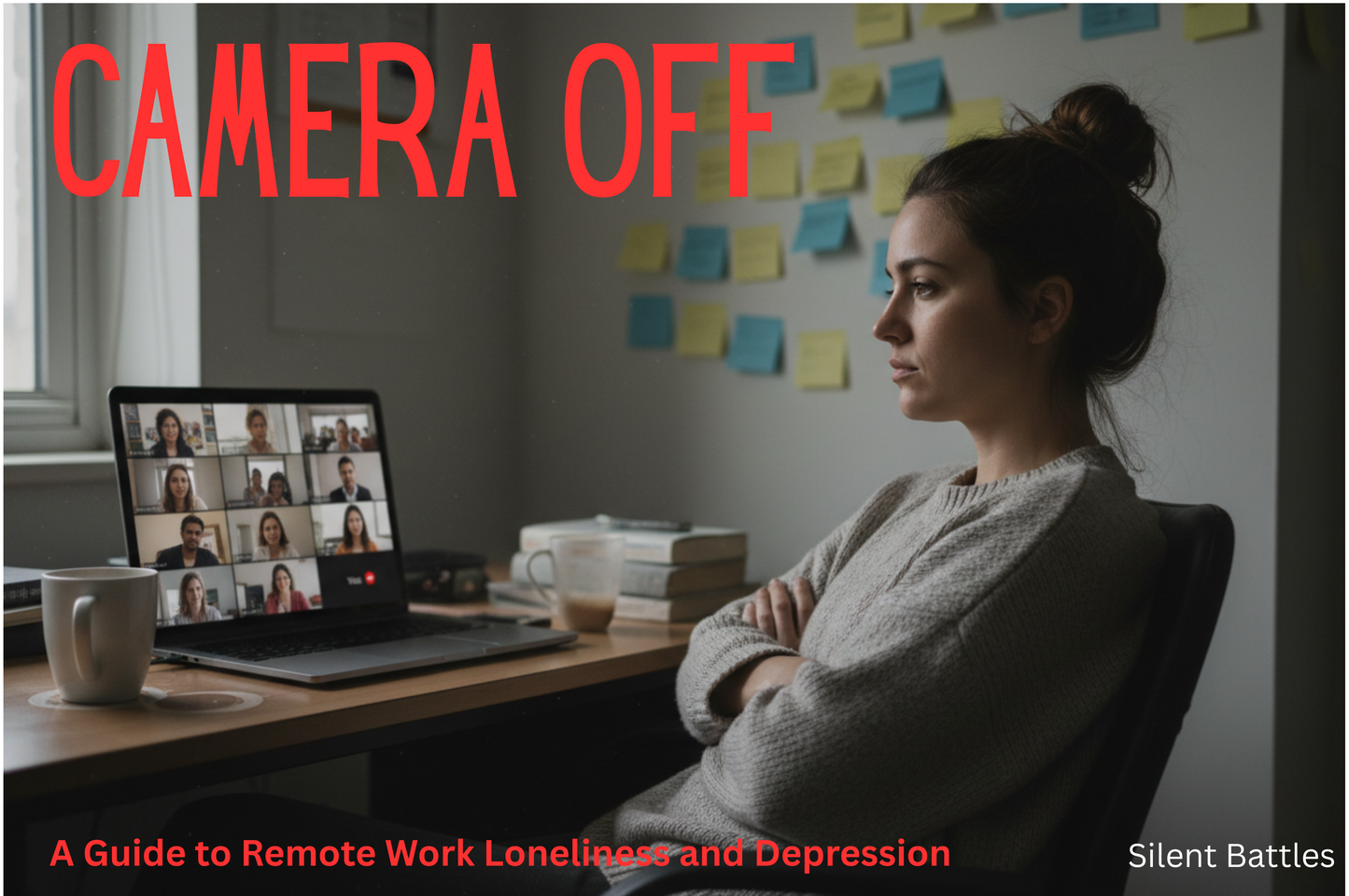
Camera Off A Guide to Remote Work Loneliness and Depression
Milana's Story
Milana had been working from home for two years and hadn't had a real conversation at work in months.
Not a real one. She had meetings — plenty of them. She unmuted, said her part, muted again. She sent Slack messages with exclamation points to seem engaged. She gave thumbs-up reactions to things she barely read.
She was 33, living in Seattle, and her commute was twelve steps from her bedroom to her desk. She'd thought she would love it. She was an introvert. She liked quiet. She liked not having to make small talk in the break room.
But somewhere in the second year, the quiet had curdled into something else. The apartment felt smaller. The days blurred together. She'd go entire weekdays without speaking out loud to another human being. She'd realize at 4pm that the only sounds she'd heard all day were her keyboard and the refrigerator.
She started dreading the mornings. Not because of the work — the work was fine. Because of the sameness. The isolation dressed up as flexibility. The loneliness that nobody talked about because remote work was supposed to be a gift.
She kept her camera off in meetings. It was easier than pretending to be okay.
What This Guide Will Do For You
By the time you finish this, you will:
- Understand why remote work loneliness is a real mental health issue — not just an adjustment period
- Recognize the signs that isolation has crossed into depression
- Know how to build structure and human connection into a workday that has none built in
- Have strategies for feeling less invisible in a remote environment — without faking enthusiasm you don't have
- Understand how to talk to a manager, partner, or doctor about what working from home is actually doing to you
You don't have to turn the camera on. But you do have to let someone see you.
This guide is a starting point, not a substitute for professional mental health support. If you or someone you know is in crisis, please call or text 988 (Suicide & Crisis Lifeline — US) or your local crisis line.
I read the first page and thought someone had been watching my life. The rest of the guide delivered on that promise. Real honest and actually useful.
Good balance of understanding why remote work loneliness happens and what to actually do about it. The scripts for reaching out to coworkers were surprisingly helpful — I always felt awkward initiating.
I'm a team lead and I bought this for every person on my remote team. We don't talk about this stuff enough. This guide opened up a conversation we needed to have.
I've worked from home for four years. The isolation crept up on me so slowly I didn't notice until I realized I hadn't had a real conversation in weeks. This guide named everything I was feeling and gave me a path out. Genuinely grateful.