
Alone in a Room Full of People — A Guide to Loneliness and Depression
Alone in a Room Full of People — A Guide to Loneliness and Depression
4.75 / 5.0
(4) 4 total reviews
Couldn't load pickup availability
Alone in a Room Full of People — A Guide to Loneliness and Depression
Alone in a Room Full of People A Guide to Loneliness and Depression
Tariq's Story
Tariq had 340 followers and hadn't had a real conversation in three weeks.
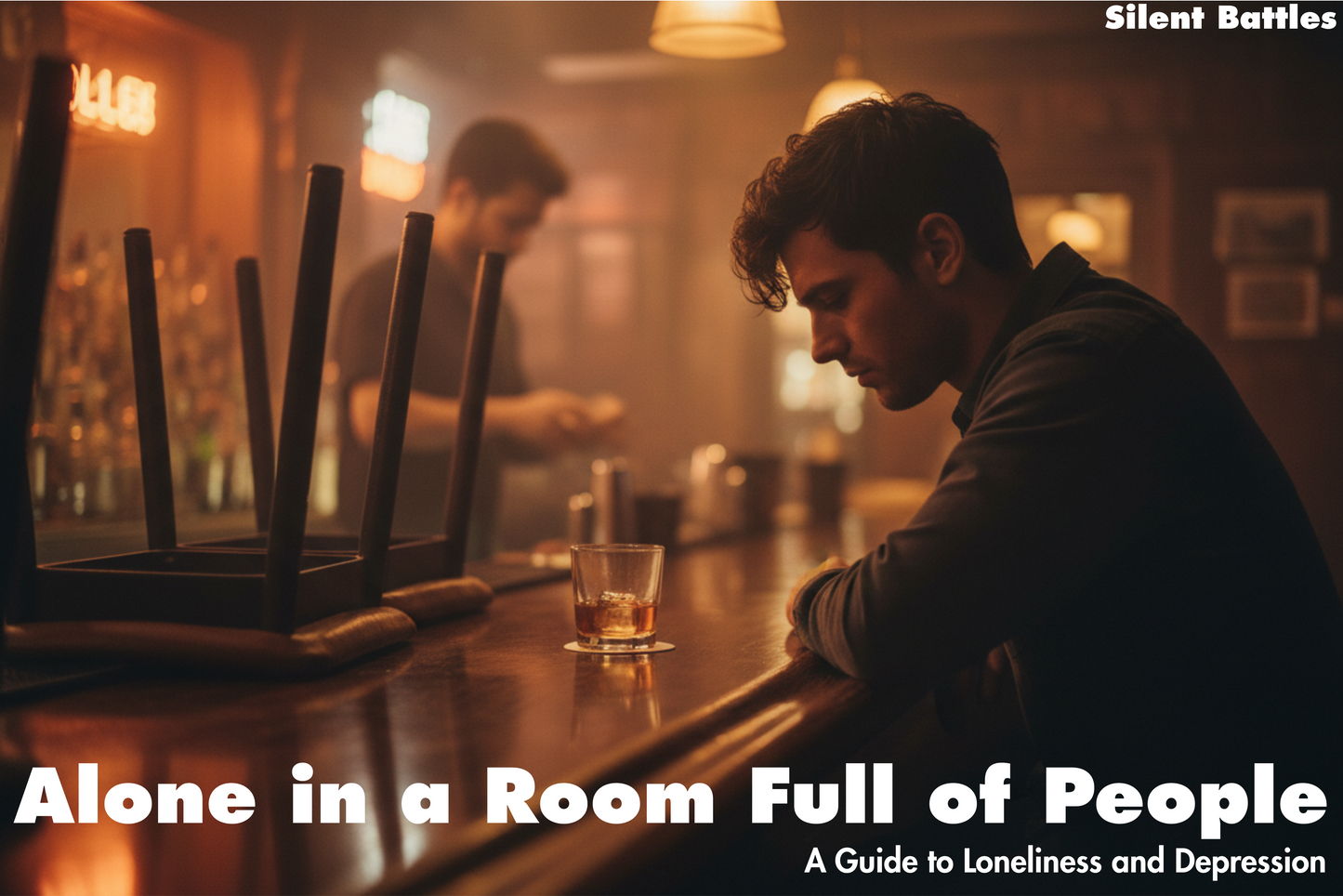
He was 27, living in Chicago, surrounded by people at work, at the gym, at the bar on Friday nights where he laughed at the right moments and left early and drove home in silence.
He wasn't shy. He wasn't antisocial. He was, by most measures, well-liked. People invited him to things. He went. He smiled. He participated.
And then he went home and felt completely, utterly alone.
He didn't know how to explain it. How do you tell someone you're lonely when you were just at a party? How do you say "I don't feel connected to anyone" when you have a full contact list and plans every weekend? It sounded ungrateful. It sounded crazy.
So he didn't say it. He just kept going to things and coming home empty and wondering what was wrong with him that he could be surrounded by people and still feel like he was on the other side of a wall from all of them.
The depression came quietly. He didn't notice it at first — just thought he was tired. But tired became heavy. Heavy became gray. Gray became lying on his couch on a Saturday afternoon staring at the ceiling, not sad exactly, just... absent.
Loneliness and depression feed each other in a loop that's hard to break alone. This guide was written to help you understand what's happening — and how to find your way back to actually feeling present in your own life.
What This Guide Will Do For You
By the time you finish this, you will:
- Understand the difference between being alone and feeling lonely — and why you can feel one without the other
- Know why loneliness and depression are clinically linked and how each one makes the other worse
- Recognize the wall — the invisible barrier between you and genuine connection — and understand where it comes from
- Have real strategies for building connection that actually works, not just being around more people
- Feel less alone in feeling alone — because this is more common than anyone admits
You are not broken. You are disconnected. And that can change.
This guide is a starting point, not a substitute for professional mental health support. If you or someone you know is in crisis, please call or text 988 (Suicide & Crisis Lifeline — US) or your local crisis line.
Really appreciated how the guide breaks things down without oversimplifying. It respects your intelligence while still being accessible. Solid resource.
I never know what to say when I'm struggling. The word-for-word scripts in this guide gave me actual language to use with my therapist and my partner. That alone made it worth buying.
We all read it and then had the most honest conversation we've had in years. Turns out most of us felt the same way and none of us had said it out loud. This guide started that conversation.
I have a full life on paper — friends family a job I like. And I am so lonely it hurts. Nobody understands that. This guide does. It's the first time I've read something that described exactly what I feel without making me sound ungrateful.